
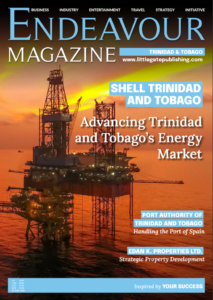
Shell is a leading global energy company committed to meeting the world’s energy needs in the most economically, environmentally and socially responsible way possible. The company now plays a leading role across many countries’ energy sectors, supported by its global expertise in the industry. A significant country where Shell has helped pioneer the energy sector is Malaysia, where Shell has been a partner for over 130 years. Having diversified the country’s energy sector from a modest kerosene venture, Shell Malaysia is now one of the country’s top employers, with operations spanning upstream, midstream and downstream energy developments.
Check out the article in the magazine below:
Shell’s first oil discovery in Malaysia came in 1910, with the first oil well drilled on Canada Hill in Miri, Sarawak. This well began production with 83 barrels of oil per day and spearheaded Shell’s operations in Malaysia. Now, over 110 years later, Shell is a leader in Malaysia’s deep-water energy sector development, playing a leading role in the extraction and delivery of oil and gas resources for the country. Thus, as a long-term and responsible partner in Malaysia’s energy sector, Shell works closely with its customers, partners, and the government to ensure that every development works towards a more efficient and sustainable energy future.
Shell has long played a key role in Malaysia’s downstream operations, but in 2014, the company began vital exploration and production operations within the upstream deep-water energy sector with the Gumusut-Kakap field. The field, located in 1,200 metres of water off the coast of Sabah, is a joint development of two ultra-deep-water discoveries: Gumusut and Kakap operated by Shell and Murphy Oil, respectively. Initial development began in 2008, when the Final Investment Decision was reached between Sabah Shell Petroleum Company Ltd (SSPC, a subsidiary of Shell plc), who own a 33% holding interest as the operator of the field, and ConocoPhillips Sabah (33%), PETRONAS Carigali (20%), and Murphy Oil (14%). The Gumusut-Kakap development reached first oil production in 2014, with the field initially producing an average of 135,000 barrels a day. With significant production from the field, the development marked a vital step in Malaysia’s energy development, bringing the country’s first deepwater development online.
Today, the Gumusut-Kakap development spans 19 subsea wells, which are tied back to a floating production and storage (FPS) vessel (GK-Semi FPS), which has a processing capacity of 150,000 barrels of oil a day. Once crude oil is produced from the field, it is transported through a pipeline to an oil and gas processing facility in Kimanis, where gas is then transported to the PETRONAS LNG complex in Bintulu, Sarawak. Now, more than 10 years since production was reached, the Gumusut-Kakap facility has undergone vital developments.
Following the oil field’s initial development, Phase 2 of the field was developed, incorporating four additional subsea tie-back wells, which connected to the GK-Semi FPS in 2019. Then Phase 3 saw the drilling of four new wells, which were again connected to the GK-Semi FPS. This phase included the drilling of two producer wells and two injection wells, which achieved first oil in 2022. Now, the project has reached Phase 4, with Shell announcing in March 2025 that first oil had been delivered from Phase 4 of the Gumusut-Kakap development, specifically in the Gumusut-Kakap-Geronggong-Jagus East (GKGJE) development. GKGJE is a joint venture between SSPC and Shell Sabah Selatan Sdn. Bhd, ConocoPhillips Sabah Ltd, PETRONAS Carigali Sdn. Bhd, PTTEP Sabah Oil Limited, PT Pertamina Malaysia Eksplorasi Produksi, Shell Exploration and Production Brunei, Canam Brunei Oil Ltd, PETRONAS Carigali Brunei Limited and Brunei Shell Petroleum.
Phase 4 of the development saw the drilling of three producer wells and one water injection well, which are tied back to the GK-Semi FPS. These wells straddle the border between Malaysia and Brunei, and the development contributes to Shell’s global commitment to bringing new upstream projects online between 2023 and 20205. Phase 4 reached oil production in March 2025 and is expected to deliver an additional 500,000 barrels of oil equivalent per day at peak production, further enhancing Shell’s development towards Malaysia’s energy future. Speaking on the announcement of Phase 4 achieving first oil, Siti Sulaiman, Country Chair of Shell Malaysia and Senior Vice President for Integrated Gas & Upstream in Malaysia, outlined that, “This achievement reaffirms Shell’s ongoing commitment to innovating and executing safe, reliable, and sustainable projects that meet today’s energy needs”. Sulaiman’s comments highlight just how valuable such developments as the Gumusut-Kakap development have been and will continue to be for Malaysia’s total energy development.
Another key deep-water project for Shell is the Malikai development, which is the company’s most recent project within the deep-water segment in Malaysia. The development is located in water depths of 500m and is the company’s third deepwater project. The project is held between Shell, who are the operator with 35% interest, ConocoPhillips Sabah with 35%, and PETRONAS Carigali with the remaining 30%. Front-End Engineering Design (FEED) activities for the development began in 2009, with the Final Investment Decision (FID) reached in 2013. The initial development involved the drilling of 17 wells and the delivery of a 26,000 metric tonne tension leg platform (TLP) production facility. The TLP was the first of its kind in Malaysia, and the whole development is tied back via subsea pipelines to the Kebabangan shallow-water hub, which has a processing facility. From here, the resources are further conveyed to Sabah Oil Subsea for export. The development reached first oil in December 2016 and is expected to have a production capacity of 60,000 barrels per day.
As Shell looks towards the future, sustainability and developing its operations towards a more sustainable future for Malaysia are key concerns. Thus, the Rosmari-Marjoram project is a vital deepwater sour gas development project for Shell designed to deliver a sustained gas supply to the PETRONAS LNG Complex. The project spans a deepwater subsea facility, a remotely operated platform and an onshore gas plant. Within this, the development will include the longest sour wet gas offshore pipelines in the world, spanning more than 200km. The project is operated by Sarawak Shell Berhad (SSB), a subsidiary of Shell plc, at 80% and PETRONAS Carigali at 20%. Once production begins in 2026, the project is expected to produce 800 million standard cubic feet per day (MMscf/d) of gas.
In October 2025, SSB announced that it had begun the development of a plant for the Rosmari-Marjoram project. This will enable the project to run primarily on renewable energy, through an offshore platform which will utilise power from 240 solar panels, with the new onshore plan leveraging hydropower provided through the Sarawak power grid system. Thus, the development of the onshore plant will enable Shell to further enhance the role of renewable energy resources across Malaysia and cement its place as a key partner both to the country and energy companies such as PETRONAS as they work towards enhancing Malaysia’s overall economic growth through competitive and resilient energy projects.
Across Shell’s operations in Malaysia, it is clear to see that the company has played a vital role in the country’s overall energy development for many years. From initial developments over 100 years ago to now, working across the country’s energy sector via its subsidiaries, Shell is focused on delivering vital projects that will enhance Malaysia’s overall oil and gas development, but in the most sustainable way possible. We look forward to seeing how Shell will continue to advance Malaysia’s energy sector, working alongside key partners, to deliver a more sustainable energy future for the country.


Add Comment