
Portugal serves as a vital hub for global trade, connecting Northern Europe with the Americas and Africa, supported by world-class infrastructure. Thus, Portugal’s economy relies heavily on intra-European trade to see such commodities as machinery, automobiles, refined petroleum, and medicinal products exported from the country, whilst machinery, chemical products and energy fuels are imported. At present, Portugal’s primary trade partners include Spain, as well as France and Germany in Europe, whilst the United States of America remains the country’s largest non-EU export market. Thus, to support such an expansive trade market, MSC Portugal provides leading shipping and logistics services across the country, through extensive daily logistics and terminal operations as part of its expansive global network through cargo, short-sea shipping and intermodal rail freight.
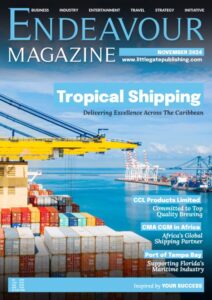
Check out the article in the magazine below:
Since 1991, MSC Portugal has been leading Portugal’s containerised cargo market, offering vital management of major maritime and logistics operations. Connecting with key ports around the country, MSC Portugal provides the vital connection between Portuguese markets and the world through extensive daily logistics and terminal operations. MSC Portugal’s operations are a key division of the global Mediterranean Shipping Company (MSC), which is made up of various subsidiary companies, such as MSC Portugal, that offer vital regional shipping and logistics operations. With a diverse portfolio of shipping companies under MSC, the company today is a leading player in the shipping sector, bringing its extensive industry knowledge and personalised services around the clock to deliver fast and reliable shipping solutions to meet its customers’ every need.
Across MSC Portugal’s services, the company brings its expertise gained from its worldwide services to offer its customers personalised services supported by a wealth of industry-specific knowledge in the world of shipping, logistics and maritime activities. Supported by this extensive knowledge, MSC Portugal can ensure its customers receive the fastest and most reliable shipping solutions possible, to ensure cargo will be transported in the best and most efficient way possible. Therefore, in Portugal, MSC Portugal’s cargo handling facilities are strategically located to ensure the timely movement of goods for both important export markets. Across these facilities, MSC Portugal provides consolidation, loading and reloading, packing and unpacking, and cross-loading services from containers to trucks.
MSC Portugal’s operations in the country centre around two ports: the Port of Leixões and the Port of Sines. The Port of Sines is an open deep-water port with excellent maritime access and today leads the Portuguese port sector in terms of volume of cargo handled. The port features advanced deep berths, which make it ideal for handling large cargo quantities across its modern and specialised terminals. Thus, the port today handles vast quantities of cargo for the Portuguese sector and even plays a valuable role in the country’s energy sector, thanks to its role in the movement and delivery of crude oil, refined products and natural gas through the ports for both local and international markets. Then, for cargo, the port has seen a significant growth in its cargo operations in recent years, along with the region’s growing cargo sector. Due to an increasing cargo volume at the Port of Sines, the port today plays a leading role as a national port for Portugal, and in turn has well positioned the port as a competitive cargo hub within global markets. With the port’s role in Portugal’s cargo sector only continuing to grow with the country’s cargo market, MSC Portugal has established a major strategic presence at the port. Today, MSC Portugal utilises the Port of Sines and its associated deep-water container terminals as a vital transhipment facility, providing valuable access to Atlantic transhipment routes, as well as global shipping routes for global trade.
The other vital port supporting MSC Portugal’s operations is the Port of Leixões, which is located in the north of Portugal. The port is able to handle a wide variety of cargo types, including containerised cargo, dry and liquid bulk, Roll-On/Roll-Off (Ro-Ro) and breakbulk. The port can manage such a variety of commodities thanks to its North and South Container terminals. The North Container Terminal has the capacity for 170,000 twenty equivalent Units (TEUs) per year, which is supported by reach stackers and 3 front-end forklifts to deliver seamless cargo movement across the terminal. Whilst the South Container Terminal can handle up to 600,000 TEUs a year, offering a large portion of the total cargo operations of the port. Thus, with the vital infrastructure to handle such large quantities of cargo, the Port of Leixões today is one of MSC Portugal’s primary commercial maritime gateways in the country, which connects the north of Portugal to global networks where it can deliver goods to markets across Europe, Africa and the Americas.
Customers using MSC Portugal benefit from the company’s local short sea experts who provide the necessary know-how to ensure that its cargo has a safe and smooth journey from its starting point to its destination. This focuses on supporting cargo from the start to the end of its journey, exemplifying MSC’s full end-to-end service. This service gives customers peace of mind that every aspect of their cargo’s journey is being handled by MSC Portugal. Beyond this, MSC Portugal also offers a range of insurance to add an extra layer of protection to shipments for added peace of mind. All of these aspects are available through MSC Portugal as a one-stop shop for local and global shipping.
However, throughout MSC Portugal’s operations, there remains a key focus on sustainability, which helps its customers move cargo efficiently to help reduce their carbon footprint. MSC Portugal offers solutions that save unnecessary road miles and use efficient terminals and port networks to reduce its customers’ overall carbon footprint across supply chains. This is vital to MSC Portugal, as well as the wider MSC Group, as enabling sustainable supply chains remains a core aspect of its operations. Today, MSC offers a unique approach to sustainability, embedding Sustainable Development Goals into every aspect of its business strategies and operations. For MSC, it recognises the role it plays in global trade connections, and so its operations and long-term visions are striving towards a more sustainable future.
A key sustainability programme conducted by the global MSC Group is the MSC Biofuel Solutions, which is the first certified carbon insetting program which has been designed specifically to reduce carbon dioxide along its customers’ supply chains and within its own operations. This programme is a key part of MSC’s goal to achieve net-zero by 2050, and so it is working across every aspect of its shipping operations to decarbonise supply chains, and in the process help MSC and its customers meet their sustainability targets. This focus on sustainability extends to MSC Portugal’s operations, and so customers can access efficient, reliable and integrated shipping services supported by carbon reduction measures to help decarbonise its customers’ supply chains one shipping route at a time.
Overall, MSC Portugal is the leading shipping partner for Portugal, supporting the country’s shipping across both local and international scales. With operations extending from the country’s primary ports and shipping hubs, MSC Portugal is primed to support its customers’ supply chains and deliver cargo in a timely and sustainable manner.