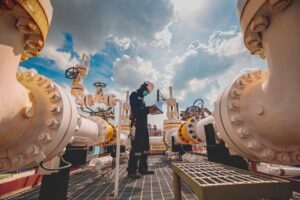



As Africa’s third-largest gold producer, Mali plays a significant role in the global mining sector. The most dominant mineral mined in Mali is gold, due to the Mandingue Plateau in the Southwest, which is a significant gold deposit that today accounts for a large percentage of the country’s total gold exports and overall Gross Domestic Product (GDP) development. Two of the most significant mine developments across this region are the Loulo-Gounko and Fekola mines, which are key gold-producing operations for Mali. For B2Gold Corp. (B2Gold), its operations in Mali centre on the Fekola Mine, where it delivers a low-cost, world-class mining operation committed to developing resources to support local communities, its stakeholders and the environment in the process.
Check out the article in the magazine below:
B2Gold has long been a leader in the global mining sector, delivering vital mining operations spanning across the world. However, every mining operation it delivers, it does so in the most responsible way possible, to support the local community and sustainable practices in the process. In Mali, B2Gold have been operating across the Fekola mine since 2024, when the company acquired the mining complex through a merger with Papillion Resources Limited. Following the acquisition, early work activities began in 2015, and just 2 years later, B2Gold announced that it had completed the construction of the Fekola Mine ahead of schedule and commenced ore processing operations. Today, the Fekola Mine is owned 80% by B2Gold and 20% by the State of Mali and is an open-pit gold mine delivering vital gold resources for Mali, located in the Southwest of the country. As of the end of 2024, the Fekola mine has produced 392,946 oz of gold and is expected to produce between 515-550 Koz by the end of 2025.
The Fekola Complex comprises the Fekola Mine, Fekola Region and the Dandoko operations. The Fekola mine includes the Medinandi permit containing both the Fekola and Cardinal pits, and the Fekola underground operation; whilst the Fekola regional operation includes the Anaconda Area, which spans the Bantako Menankoto and Bakolobi permits. In addition to these permits, the Fekola Complex also includes a processing plant, which features a conventional flow sheet which consists of a single-stage primary crushing, a semi-autogenous primary grinding mill with pebble crushing, and a secondary ball mill. These feed into a leach feed thickening with a thickener overflow treated through carbon in a column circuit. Other operations include agitated leaching followed by carbon-in-pulp absorption, elution, electrowinning, and gold recovery to doré, featuring cyanide destruction, tailing thickening, and a disposal circuit.
In July 2025, approval was granted for B2Gold to commence underground operations at the Fekola mine, including stope ore production. This follows B2Golds’ ongoing underground exploration development work since 2024, in anticipation of the Underground Mining Approval. This preparation work includes more than 9,300 metres of development work, as well as the installation of all required underground mining infrastructure. Now, following the approval, B2Gold can commence stope ore production. B2Gold anticipates underground operations at the Fekola Mine to contribute between 25,000 and 35,000 ounces of gold production, ramping up significantly in 2026 and subsequent years.
Across the Fekola Mine, power is delivered through a combination of heavy fuel oil (HFO), diesel and solar power. However, as a company moving towards a more sustainable future, it has focused on the use of solar power in recent years. In 2021, B2Gold commissioned a new 30-megawatt alternating current (MWAC) solar power facility, which was designed to help reduce greenhouse gas emissions by roughly 38,000 tonnes in 2022. Then, in 2023, further expansion to the solar power facility was announced with the expectation of reducing greenhouse gas emissions by a further 24,000 tonnes per year once completed.
In fact, B2Gold announced in March 2025 that it had completed phase 2 of the expansion of the Fekola Solar Plant following the expansion plans laid out in 2023. Initial land clearing, road construction and physical equipment construction were quickly ramped up, completing the expansion phase in the 4th quarter of 2024, with the facility becoming fully operational earlier in January 2025. The expansion included the construction of 46,200 new solar panels, which increased the number of solar panels across the facility to a total of 142,912. The expansion provided an additional 22 megawatts (MW) of solar capacity (52 MW total capacity) and 12.6 Megawatt-hours (MWh) of battery capacity. This expansion is expected to reduce the mine’s annual emissions of heavy fuel oil by an estimated 20 million litres and will supply approximately 30% of the site’s total electricity demand. With such a capacity, the Fekola Solar Plant is considered to be one of the largest off-grid solar/HFO hybrid power plants in the world.
In the announcement of the completion of the second phase of the Fekola Solar Plant in March, Ken Jones, B2Gold’s Director of Sustainability, announced, “the expansion of the Fekola Solar Plant is a significant initiative in support of B2Gold’s emission reduction target. The expanded facility will allow the Fekola site team to turn off the HFO plant for a portion of the day during times of sufficient solar radiation, a tremendous achievement for B2Gold and a testament to our commitment to implementing renewable energy solutions”. Jones’ comments highlight B2Gold’s mission to be a responsible mining company that is committed to meeting vital sustainability goals to protect the environment and the people surrounding its operations.
As B2Gold looks towards the future, the company remains focused on ensuring the Fekola complex maintains its track record of delivering safe and reliable gold production, supported by operations that ensure continued economic benefits and jobs for those in the local communities, and across the State of Mali. Now operating at full capacity, B2Gold expects the Fekola mine to see an overall production rate for 2025 of between 515,000 tot 550,000 ounces.
Across the Fekola Mine, B2Gold is focused on delivering vital gold resources for Mali in the most responsible way possible. Working with the State of Mali, B2Gold has been able to begin underground mining operations at the Fekola mine, set on enhancing the production rate of the mine and, in turn, delivering significant economic benefits to the country in the process. However, with sustainability underpinning every aspect of its development, including the development of the Fekola Solar Plant, B2Gold is ensuring that its operations are delivering these vital resources in a way that limits its impact on the environment in the process. We look forward to seeing how B2Gold will continue to develop the Fekola Mine and bring even more vital mineral resources and economic development to Mali over the coming year.