
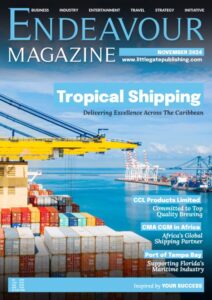
With an integrated network spanning the ports of Australia, A.P. Møller – Mærsk (Maersk) is now one of the leading shipping companies operating in the country to provide vital shipping and logistics solutions to Australian businesses. Maersk is able to deliver total coastal coverage for businesses both small and large, across the country, thanks to its operations spanning 5 key gateway ports along the Australian coastline. These ports are met with Maersk’s key shipping services that ensure customers across Australia can leverage Maersk’s worldwide network to enhance global trade and connectivity.
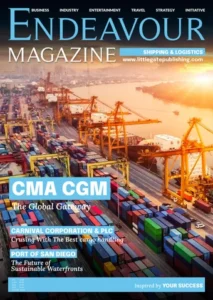
Check out the article in the magazine below:
Maersk has been operating in Australia since 1993, offering a range of competitive services that ensure the country’s ports remain well-connected across the global shipping sector. In Australia, Maersk brings its expertise as a global integrated logistics company to provide Australian businesses with key supply chain solutions that ensure cargo is supported from its origin to end markets. Across Australia, Maersk provides integrated logistics services which ensure businesses can connect globally through both ocean and inland transportation solutions. These solutions are then supported by customs services and warehousing operations to help enhance service efficiency and keep cargo moving towards its end market.
To ensure that the businesses across Australia have access to Maersk’s vital shipping and logistics solutions, the company has key shipping services operating across 5 key gateways into the country, including Sydney, Melbourne, and Brisbane. In addition to these, Maersk owns warehouse services in Perth and Adelaide. Across these locations, Maersk has key shipping services including the Greater Australian Connect (GAC), Eastern Australia Connect (EAC), and the Western Australia Connect (WAC). These shipping routes are designed to enhance the connectivity of cargo across the country and allow these networks to seamlessly join with Maersk’s international network.
Across its Australian network, Maersk operates 16 vessels which enable weekly services providing direct connection to and from Australia to support global trade. In 2023, Maersk added the Southeast Asia Connect service to its Australian network to bring even more connectivity across the region, connecting Australia with ports in Malaysia. Across all of these networks, Maersk is passionate about enhancing the connectivity of Australia’s shipping network to ensure commodities travelling to and from the country are facilitated by reliable and efficient shipping services designed to enhance global trade.
One of the key ports that Maersk calls at is the Port of Adelaide, located in the South of Australia. The port, just 14km north-west of Adelaide, is an essential link for Maersk’s Australian network, offering a vital connection to the south of the country via the GAC route. The Port of Adelaide, overseen by Flinders Ports, handles key import and export logistics for the country, with customs brokerage services and warehouse facilities that help enhance Australia’s trade sector. Then on the east coast, Maersk calls at the Port of Brisbane, which has long been a cornerstone of Queensland’s economy. This port is home to one of Australia’s fastest-growing container ports and is the state’s largest multi-cargo port. With a wealth of cargo travelling through the port, Maersk operations to and from the port have long been vital to enhancing Queensland’s economy, keeping businesses and customers’ supply chains seamlessly moving in and out of the state.
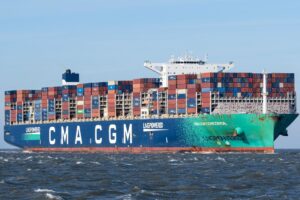
The Port of Brisbane has long been key to Maersk’s shipping potential in Australia, and a key reason for this is because of its role in Maersk’s focus on sustainability in the development of its shipping fleet. A key example of this focus on sustainability was seen in October 2025, when Maersk introduced the Brisbane Maersk vessel. The vessel is the 4th Hermes-class series vessel introduced by Maersk into its fleet, and was made in partnership with HY Hyundai Heavy Industries and Everllence. Combining advanced technology and environmental responsibility, the vessel is leading the way towards the sustainable development of the shipping industry. This is because the vessel is equipped with a dual-fuel engine, which is capable of running on bio and e-methanol fuel, making it a more sustainable vessel option. By introducing such a vessel, the Brisbane Maersk can enhance Maersk’s Australian network whilst also delivering on key decarbonisation efforts across its global shipping fleet.
Another key port serviced by Maersk is the Port of Fremantle. The Port of Fremantle is the largest and busiest cargo port in Western Australia. The port is split into two harbours: the Inner Harbour and the Outer Harbour. The Inner Harbour is responsible for almost all container trade in the west of the country, whilst the Outer Harbour is responsible for major bulk cargo as one of the key bulk cargo ports serving the country. Key bulk cargo moved through the Outer Harbour includes grain, petroleum, liquid petroleum gas, alumina, mineral sands, fertiliser, coal, sulphur and other bulk commodities. With such vital commodities being both imported and exported through the port, the Port of Fremantle today is estimated to handle $3.6 million worth of trade every hour.
Maersk operations also span the Port of Melbourne, which is a hub for containerised, automotive and general cargo. The port serves businesses and customers across Victoria and the south-east of Australia. This port is vital to Australia’s overall trade, as more than a third of Australia’s total container trade is handled at the Port of Melbourne across the port’s 30 commercial berths. The port also includes several key container terminals, including Australia’s largest automotive trade terminal, which sees up to 1000 new motor vehicles pass through the terminal a day. Alongside this are multi-purpose and bulk terminals, which handle containerised, breakbulk, chemicals, grain, cement, and other liquid and dry bulk products.
Other key ports met with Maersk’s key shipping carrier services are Port Newcastle, Port Sydney and Port Townsville. Across these, Maersk operates as a major shipping carrier, connecting Australian businesses globally. Sydney is vital to Maersk’s operation in Australia because this is where the division’s main office is located and is home to key ports for Maersk’s international network. The Sydney office works alongside Maersk’s office in Melbourne to enhance the shipping network of the country. For the ports of Sydney specifically, Maersk provide key international ocean freight services, supported by inland transportation, custom brokerage and local warehousing services to ensure seamless movement of cargo as it enters and exits the country via Sydney. Then, the Port of Townsville has been developing towards the future and is now Northern Australia’s largest container and automotive port. Handling more than 30 diverse commodities, the port is expected to continue to expand its cargo operations over the coming years.
One of the most vital developments for Maersk’s Australia division came in 2023, when the company opened 7 new facilities across the country designed to enhance Maersk’s omnichannel fulfilment capabilities. The facilities, which were implemented in 2024, have vastly expanded Maersk’s footprint in Australia, offering an enhanced logistical landscape that the company can utilise to provide better service for its customers. Omnichannel capabilities ensure that Maersk has more availability and service, whilst reducing working capital and delivering better efficiency. Plus, omnichannel capabilities ensure that Maersk can utilise more renewable energy sources in its operations, to help improve the sustainability of its operations.
One of the key facilities is the Derrimut Facility in Melbourne, a modern logistics hub which utilises progressive AI to automate warehousing operations, whilst catering to e-commerce fulfilment needs and offering logistics solutions to different industries. Maersk’s Managing Director of Oceania, Kylie Fraser, outlines that “Our expansion throughout Australia is giving our customers a more efficient and sustainable service throughout the supply chain. Australia imports a high volume of consumer goods, and we are excited to be able to continue to efficiently deliver goods while growing our business and contributing significantly to regional economic growth”.
As Faser highlighted in the press release for the new facilities, the expansion of Maersk’s facilities across Australia will enable it to better serve its customers and their shipping and logistics needs, whilst enhancing the sustainability of the entire process through modern and technologically advanced systems. Therefore, the new facilities will ensure Maersk can now offer exclusive offerings that will help reduce costs with more effective warehousing and reduce the amount of time it takes for cargo to reach end markets by placing goods close to their consumer markets.
Across Maersk’s Australian operation, there remains a key commitment to enhancing its network to facilitate seamless and more integrated logistics solutions that cover the entire coastline. From key port operations to vital shipping routes, Maersk has continually expanding its footprint across Australia, and therefore, it is no surprise that the company is now one of the leading shipping companies helping businesses across Australia reach global markets.