South America is home to a thriving and rapidly expanding economy, largely supported by the country’s export and import markets. These markets see export commodities such as oil, natural gas, agricultural products, manufactured goods, and metals exported to local and international markets. For this reason, countries such as Brazil, Argentina and Colombia are now major economic producers for South America. However, alongside these already thriving markets, there are emerging growth leaders such as Guyana and Peru, where significant growth has already been seen in recent years. Thus, with thriving economies across South America, largely supported by global trade, key shipping lines such as A.P. Møller – Mærsk (Maersk) are pivotal to serving the countries across the region with integrated ocean, land, and air solutions that support their customers’ shipping and supply chain needs, to support each country’s respective growth and economic development towards the future.
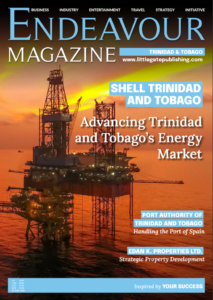
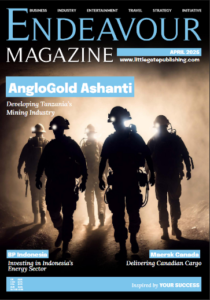
Check out the article in the magazine below:
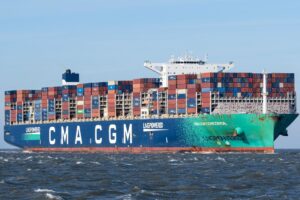
Maersk is a leading globally integrated transport and logistics service provider, operating across more than 130 countries worldwide, supported by 100,000 employees. Maersk was founded in 1904, and in 1917 began operating in the Americas with inter-American trade operations. Over the years, Maersk grew its presence in the Americas, and by 2017, it had made significant developments to strengthen its position in South America. This positioning was largely brought about by its acquisition of Hamburg Süd, which was a dominant carrier in the region. Today, Maersk provides comprehensive, integrated logistics and shipping services across South America, with a key focus on end-to-end container logistics. Across the region, Maersk provides ocean freight traversing both east and west coasts, as well as providing inland transportation via trucks and barge. Beyond this, customers across South America can also benefit from Maersk’s warehousing and distribution centres
Cargo moved by Maersk across South America benefits from its customised solutions, which include specialised cold chain logistics to support perishables. This focus on delivering freight solutions customised to each cargo’s needs is vital for South America, where a significant portion of its total trade is in perishable goods from the agricultural sector. Therefore, the agricultural market is a thriving and growing economy for South America, with countries such as Brazil and Argentina dominating the market with their delivery of products such as soybeans, corn and sugar. Thus, Maersk’s specialised solutions help enhance South America’s agricultural trade, ensuring that every product remains at the best and highest quality, often in temperature-controlled containers, to support its customers’ trade every day.
A key port for South America is the Port of Santos in Brazil. The port is the largest port in Latin America, and connects with over 600 ports across 200 countries worldwide. Maersk runs direct services to and from Brazil, many of which arrive at the Port of Santos and connect Brazilian businesses with the world via its vast ocean fleet. In 2023, the port handled 173 million tons of cargo, and 5 million twenty equivalent units (TEUs). Today, 29% of the country’s trade flows through the port, and so Maersk’s operations to and from the port help support the country’s economic development through vital export and import trade across the world.
In March 2025, Maersk signed a long-term strategic agreement with DP World, a leader in the world’s maritime shipping and logistics industry, to expand the maritime services operating from DP World’s terminal at the Port of Santos in Brazil. The agreement saw Maersk introduce an additional long-term service and minimum service level, which will see 6 new services with 8 weekly calls arrive at the port, increasing to 7 services and 10 weekly calls in 2026. Speaking on the agreement, Paulo Ruy, Regional Head of Terminal and Port Procurement for Latin America at Maersk said, “This agreement with DP World secures service capacity for Maersk at the Port of Santos. It aligns with our strategy to ensure reliable and efficient operations for our customers in the region.” Ruy continues, “By having this commercial agreement with DP World, we are able to meet the growing demand for container handling and enhance our service offerings, ensuring that we continue to provide end to end logistics solutions, in addition to our stand-alone products”.
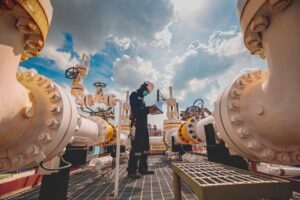
Another key commodity for South American trade is energy resources, including crude oil. A key hub for this is in Guyana, where oil accounts for a significant portion of the country’s total exports, alongside gold and agricultural products. With the United States, Panama, Singapore and Trinidad and Tobago being key trading partners for Guyana, it requires an extensive and global shipping network to support its local and international trade operations. Today, Maersk serves the Port of Georgetown, which is Guyana’s primary maritime hub located on the eastern bank of the Demerara River’s mouth. The Port handles containerised, bulk and general cargo, which acts as the primary gateway for international trade. Maersk provides shipping services to and from the Port of Georgetown, supported by a weekly connection to its transshipment hub in Manzanillo, Panama. These services offer standard, refrigerated, and oversized cargo utilising feeder services that help connect Georgetown in Guyana to global markets.
Another key port for Maersk’s South American operations is the Port of Callao in Peru. The port handles over 90% of the country’s containerised cargo, moving 60% of this through the South Terminal, which is operated by DP World. As the third largest port in South America, and the largest on the west coast, it provides vital trade operations for Peru. As a global mining exporter, mineral resources such as copper and gold dominate the country’s global trade operations, alongside key agricultural products like fruits. The minerals are primarily traded with China, which is one of the largest trade partners for Peru, alongside the United States, Canada, India, and Korea. Therefore, with markets across the world purchasing the mined ores from Peru, the country relies heavily on global shipping fleets such as Maersk to facilitate these trade operations. At present, Maersk operates regular services from Callao and also Paita, which connect Peruvian businesses to the world via its global fleet. With expertise in transporting mining, agriculture an even fishing produce, Maersk is ready to help businesses across Peru with all of their export and import needs
In March, Maersk highlighted that supply chains in Latin America are fast evolving, largely driven by new consumer landscapes. Within these landscapes, spending behaviours are changing and demographics are shifting, whilst digital shopping continues to focus on convenience and visibility. Thus, the logistics model required to meet these growing demands is changing to serve them. For many companies operating across Latin America, a single uniform services strategy is no longer viable, and instead purpose-build logistics has become vital. Thus, Maersk is working to develop its operations in line with this growth to allow it to continue to serve the diverse and expanding markets of South America with efficiency, speed, reliability, visibility and convenience.
What we can see across Maersk’s operation in South America is integrated shipping services, which are designed to meet the cargo and trade needs of each respective country’s commodities. From agriculture to energy and mining, Maersk’s shipping solutions are backed by its global expertise to provide the essential and necessary solutions that meet the needs of customers across South America today. As customer demands continue to develop, Maersk will continue to expand its offerings to ensure it can support South American businesses and help them continue to expand economically across global trade markets for many years to come.