

Growth is the clearest sign that your business is doing something right. Ultimately, growth is synonymous with more customers, more contracts, and a larger workforce, all of which can create exciting new opportunities. But growth also brings practical challenges, especially when it comes to your premises.
In fact, many businesses come to reach a point where they’ve outgrown their current space, as it no longer meets their needs. This can show in different ways, such as the team struggling to fit in the office space or the storage areas being stretched past their capacity. It can also affect operational workflows, as they may become inefficient when the space is too crammed. When a business reaches this stage, it calls for an important decision: it’s time to expand the premises, but should they purchase an existing commercial property or should they invest in building a new one?
There is no right or wrong answer, so it’s important to figure out the best option for your situation.
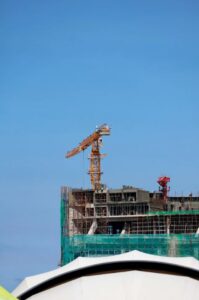
Image Source: Unsplash – CC0 Licence
When Buying an Existing Property Makes Sense
Ultimately, purchasing an existing commercial property is the quickest route to expanding your premises. For businesses that need additional space fast, an established building can provide a practical solution without the delays associated with planning, design, and construction.
Buying existing premises also means that you know exactly what you are getting. You can assess the building’s layout, parking facilities, access routes, and surrounding area long before making a commitment. In many cases, utilities and infrastructure are already in place, so the transition can be smooth.
This is the ideal option for accommodating a rapidly growing team. The trade-off, though, is that existing properties may not perfectly match your company’s requirements.
The Advantages of Building a Facility from Scratch
For businesses with specialised operational needs, constructing a purpose-built facility can be a worthwhile investment.
Indeed, it allows every aspect of the property to be designed around the business needs. This means that warehouse layout can be optimised for efficiency. Office spaces for collaboration and customer-facing areas for brand identity.
Modern construction also provides opportunities to incorporate energy-efficient systems and sustainable materials from the start, which can reduce operating costs over time.
While building requires a larger upfront investment and a longer timeline, it can be a strategic decision that supports long-term objectives.
The Role of Site Preparation
It’s easy to focus on the finished building when you think about commercial construction. But some of the most important work takes place before the construction even begins. Proper site preparation creates the foundation for a successful project. Depending on the condition of the land, the construction project may involve clearing vegetation, improving drainage, preparing access routes, and carrying out professional excavation work before the site can be used.
Why is this critical? This stage of the project helps prevent costly issues later by preparing for stable foundations. It can be time-demanding, and it can lead to delays depending on the quality of the terrain you are working with. However, it’s a step that can’t be skipped or rushed.
Naturally, choosing between buying and building may seem easy at first when you compare the differences in delays and costs. However, for business owners who are willing to consider broader goals and project growth over several years, the answer may not be as obvious as it seems.
The truth is, there is no single solution that works in every situation. With growing environmental responsibilities to consider, more and more businesses believe that building may end up more cost-effective.