
The Port of Halifax is a leading international gateway connecting Canada to the world through vital port and shipping operations. With the capabilities to handle significant container traffic, break bulk and cruise business, the port is a vital asset to the Canadian economy, connecting businesses across the country with markets around the world. Canada has a thriving trade sector, with key exports from the country including crude petroleum, gold, cars and refined petroleum, and imports including cars, vehicle parts and machinery. Thus, ports such as the Port of Halifax help deliver these vital commodities, alongside a thriving cruise sector, to position the country as a thriving hub for tourism and trade opportunities.
Check out the article in the magazine below:
Connecting to more than 150 countries around the world, the Port of Halifax is a diverse cruise and cargo port located in Nova Scotia, Canada. The port benefits from being ice-free year-round with minimal tides, making it the ideal location for accommodating the world’s largest shipping and cruise vessels. For this reason, the Port of Halifax today serves major shipping lines from across the world, including key transatlantic, Suez and pendulum routings to Europe, the Middle East, Southeast Asia/Indian Subcontinent and the Far East. Additionally, as the first inbound and last outbound port to North America from Europe and the Mediterranean, the port also plays a vital role in supporting shipping to these markets.
With a vital shipping network behind it, the Port of Halifax plays a key role in supporting Canada’s economy. We can see the vital role of the Port in figures from 2022, when the total impact of the Port of Halifax, including Nova Scotia exporters, was $4.87 billion in economic output for the province of Nova Scotia. This generated direct and spin-off impacts of $2.5 billion in GDP, with $1.6 billion in labour income from over 25,300 jobs generated. Thus, the port plays a vital role in supporting the economy of Canada, offering competitive solutions across cargo, cruise and business opportunities.
The Port today is overseen by the Halifax Port Authority (HPA), who are the strategic port manager focused on connecting the port with global markets in order to create value for its customers, partners, visitors and wider community. Thus, by working with key partners, HPA has been making vital infrastructural developments to the ports in recent years. Through vital investments, the port is now equipped with a modernised infrastructure, using the latest technology and security, positioning the Port of Halifax as a hub of future development.
The Port of Halifax’s infrastructure includes the PSA Halifax Atlantic Hub Terminal, PSA Halifax Fairview Cove Terminal, Ocean Terminals, Richmond Terminals, Halifax Grain Elevator, Halifax Seaport, Cruise facilities, and the Ocean Terminals Sequestration Facility. HPA oversees these as the landlord and operates them, with the exception of the PSA Halifax Atlantic Hub Terminal and PSA Halifax Fairview Cove Terminals, which are operated by PSA Halifax, a subsidiary of the global PSA International. PSA Halifax Atlantic Hub spans 76.5 hectares of land, with 8,00 feet (ft) of on-dock, double-stack rail availability. Serving this, the port has 5 super post-Panamax gantry cranes, including a state-of-the-art truck marshalling yard. PSA Halifax Fairview Cove then sans 70 acres of land with 2,87 linear feet of dock. The Terminal has 11,000ft of on-dock, double-stack rail, with four gantry cranes (three of which are super post-Panamax cranes). These two terminals are vital in supporting the Port of Halifax’s overall cargo operations.
The Ocean Terminals then span Piers 23, 24, A, and A1. Pier 24 is utilised for working cargoes, project cargos and heavy lift, whilst Pier 23 offers 53,000 square feet of multi-purpose space. However, the primary use of Pier 23 is for cruise operations. Piers A and A1 offer deep-water berths, with excellent truck and rail access. They offer both covered and open stages for cargo, specially equipped with the tools to handle a diverse array of cargo types. Richmond Terminals is centrally located with highway access, offering multi-purpose facilities for cargo with an enlarged open pier and laydown area to handle roll-on/roll-off and break-bulk cargo with enhanced heavy-lift capabilities.
The final facilities at the Port of Halifax include the Halifax Grain Elevator, offering a system of galleries and conveyors, helping move grain to and from vessels. This facility is operated by Halifax Grain Elevator Limited, under lease from HPA. Then, the final two key facilities are the Halifax Seaport, which encompasses the visual arts and cultural district of the Port, offering retailers, cruise terminals, event facilities, cafes, offices, a university and a museum. The Halifax Seaport fits well with the final key facility, which is the port’s cruise facilities, which encompasses the other central business operation carried out at the Port of Halifax, aside from cargo.
The Port of Halifax has a thriving tourism sector, with the port playing a key role in supporting cruise operations to and from the port. Halifax has long been a popular cruise destination due to the port city’s rich history, vibrant downtown and array of local seafood that brings tourists from across the world. Thus, the Port of Halifax has seen significant growth each year within the tourism sector, and so the port has remained a popular destination along many cruise line itineraries, including for Atlantic Canada. To facilitate this rapidly expanding industry, the port has expanded its facilities to accommodate the world’s largest cruise ships, with more than 2,000 ft of continuous berth space. The principal piers responsible for the Port of Halifax’s cruise operations are Piers 22 and 20, where there is direct ship-to-shore access for passengers and a dedicated cruise passenger terminal. As mentioned, Pier 23 is also utilised for some cruise activities. Once passengers reach the port, HPA staff work to deliver reliable and efficient cruise operations.
We saw in December that 2025 was the Port of Halifax’s longest cruise season yet, running from April until November. The 2025 cruise season saw the port welcome 17 cruise lines, which made 105 calls to the port. Included in this were 7 inaugural port visits, 2 quadruple ship days and multiple double and triple ship days. Across these calls, the port saw 197,368 passengers through the port, as well as crew. One of the inaugural vessel visits was from Virgin Voyages with the Brilliant Lady.
The 2025 season exemplifies the growing and vital role the port plays in supporting Canada’s tourism sector. Speaking on the 2025 cruise season, Robyn Stewart, Manager of Cruise Development at the Halifax Port Authority, outlined that “Building on our success, we want to strengthen Halifax’s position as a premier cruise destination and continue creating memorable guest experiences for all our visitors”. Stewart’s comment here highlights that the cruise sector is a thriving and growing industry of the port, and through its continued investment in the sector, it is positioning the port as a highly sought-after cruise itinerary destination.
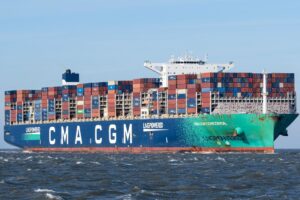
As the Port of Halifax looks towards the future, it will continue to expand its offerings in both its cargo and cruise tourism sectors. In February this year, PSA Halifax announced that the PSA Halifax Atlantic Hub had made a vital expansion with the INDAMEX Service, following the arrival of CMA CGM’s Cypress vessel to the hub. The INDAMEX is a service connecting the Indian sub-continent with the Canadian East Coast, in order to provide a comprehensive coverage of key ports across South Asia and the Middle East. The service will offer competitive transit times and reliable schedules, enabling Canadian businesses access to growth markets across the world.
Speaking on the announcement of the Cypress arriving at PSA Halifax Atlantic Hub, Paul MacIsaac, Senior Vice President of Halifax Port Authority, outlined, “This direct container service connecting Canada and India reinforces Halifax’s position as a strategic global gateway in eastern North America. The INDAMEX service will create new opportunities for Canadian businesses to diversify markets in South Asia and strengthen supply chain connectivity.” MacIsaac’s comments highlight how the INDAMEX provides yet another vital network that will strengthen the Port of Halifax’s position as a key hub serving shipping and cargo operations across the world.
The Port of Halifax is a vital and developing port that is expanding its services to meet the current and future demands of both the cargo and cruise industry. With a plethora of facilities across the port, and under the guidance of HPA, the port today is a thriving hub serving the world from North America. With the introduction of the INDAMEX service and the port’s growing cruise operations, we look forward to seeing the continued role the port will play in supporting Canada’s economic development for many years to come.