



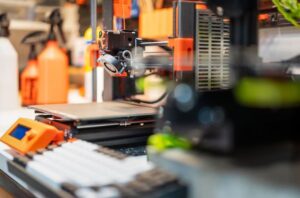
Many industries are now adopting additive manufacturing, which continues to reshape the way products are created. Businesses are now looking for ways to speed up their development cycles and make their operations more efficient. Fortunately, advanced 3D printing technologies are used as tools across various industries, such as consumer goods and healthcare, enabling them to deliver repeatable, high-quality parts while maintaining efficiency.
Among the technologies that are driving this transformation, the HP Multi Jet Fusion has gained attention because it has the ability to produce strong components at impressive speeds. They’re able to optimize applications and leverage data to streamline the material’s development. The users can become their own process expert through the transfer of knowledge from the technical experts of HP. See more about HP when you go here.
Understanding HP Multi Jet Fusion Technology
There are a lot of models available when choosing this family of printers, so it’s important to know how they work in the first place. The MJF is a powder-bed fusion that can build a part layer by layer. Instead of utilizing lasers, this kind of technology deposits detailing agents onto a powder surface before thermal energy is applied.
This technique can speed up the production while high levels of dimensional accuracy are maintained. The components that are produced through these printers can exhibit stronger mechanical properties that can make them suitable for end-use products and custom projects that the user has in mind. These designs are flexible, where complex geometries that are typically difficult to manufacture using traditional machining can be made possible with them. The printers can create a consolidated assembly without excess to make it a more cost-effective project for many.
Overview of the HP MJF 5200
The HP MJF is designed to produce materials at an industrial scale, and it focuses on automation consistency. This is built to have repeatable production, and this predictability becomes valuable for those who need accuracy with their parts. This printer supports high-volume production, and it allows many businesses to move from prototyping (https://study.com/academy/lesson/what-is-a-prototype-definition-function-theory.html) to manufacturing.
It has an automated power handling that reduces downtime, and natural cooling units allow continuous production. It’s great for businesses that need to produce parts at night with minimal human intervention, and it can support a diverse range of engineering materials like PA 12 Glass Bead, TPU, PA 11, and more. It integrates with HP’s software for better fleet management, and it can enable manufacturers to move into newer markets that need end-use production parts.
Key Features of the HP MJF 5600
This is the next-level build of the 5200 series, which adds better process control, and there are enhancements that are designed to create higher output. It has features like electricity, static control, and the focus is more on the manufacturing process as a whole. There are advanced automation features that are able to streamline a company’s workflow and reduce the need for manual intervention.
There’s also enhanced monitoring that can provide deeper visibility into the performance of the machine, and real-time data collection can help identify potential issues that may affect the outcome of the materials being made. These kinds of capabilities can help decrease unexpected downtime, and this allows organizations to plan for their long-term growth.
Productivity and Workflow Comparison
Many are comparing the two because they’re looking for a printer that’s capable of providing what they need in a very demanding manufacturing environment.
For those who want to try the 5200, know that it can deliver a stronger performance when it comes to production, and this is enough as a solution for many manufacturers. It can produce prototypes while maintaining consistency in the quality levels.
The 5600 introduces improvements that are able to optimize the workflows, and there are monitoring systems that can reduce bottlenecks. Some manufacturers can evaluate which printers are right for the prototype that you have in mind. You can find out more in companies like Norra AM that implement industrial additive manufacturing, where they can provide you
with their expertise when it comes to HP Multi Jet Fusion tech.
Which System Is the Better Choice?
The answer will largely depend on a company’s production goals, where those who are seeking moderate volume production might find that the HP MJF 5200 is more than capable of meeting their requirements. It has a proven performance that makes it a valuable asset in many
companies.
An organization that wants to produce higher efficiency and needs scalability can get the 5600 due to its enhanced workflow. It has advanced monitoring features that can support their growth while making sure that there’s consistency in the output. Many manufacturers should begin evaluating their options while considering staffing resources before making a decision.
Work with experienced providers to gain valuable insights about these technologies and how they can perform across different industries.