
For many modern warehouses, there’s a lot of change going on operationally to make it more efficient and, in many ways, more sustainable.
The use of sustainable material handling equipment is transforming warehouses by shifting the focus from cost-driven operations to more environmentally responsible, energy-efficient, data-driven systems.
As a business, the use of sustainable material handling equipment is necessary to keep up with the demands that are expected for a lot of modern companies nowadays.
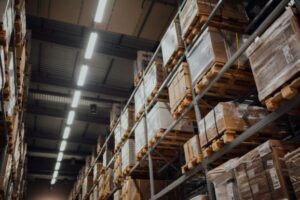
How Sustainable MHE is Transforming Warehousing
So how does sustainable MHE transform warehouses for modern businesses?
1. Shift to Electric and Green Power Sources
The shift and transition from internal combustion engines to electric-powered equipment is one of the most significant changes. It reduces warehouse reliance on fossil fuels and eliminates tailpipe emissions, too.
Equipment like lithium-ion forklifts are becoming the new standard, providing longer runtimes, faster charging and offering zero emissions compared to lead-acid or diesel alternatives.
The transition from internal combustion (IC) engines to electric-powered equipment is the most significant change, reducing reliance on fossil fuels and eliminating tailpipe emissions in warehouse environments.
Used in heavy-duty operations, they provide faster refueling and long range, contributing to a cleaner and more efficient material handling. Warehouses are increasingly installing solar panels to help generate green electricity for the purpose of charging equipment.
2. Automation and Energy – Efficient Robotics
Along with the above, you have the increased use of automation helping to reduce labor costs but to also optimize energy usage.
Automated guided vehicles and autonomous mobile robots help to reduce need for human-operated and energy-intensive machinery. Such systems work 24/7, have higher accuracy and lower energy consumption compared to manual operations.
These automated systems also reduce areas, improve order fulfilment and allow for less lighting and heating, helping conserve energy and save on utility bills.
3. Space Optimization and Enhanced Safety
With sustainable practices in MHE, there are plenty of opportunities for space optimisation and enhancing safety too.
Vertical storage is one example helping optimize warehouse space with technologies like Automated Storage and Retrieval Systems allow companies to build up, rather than out. It helps to reduce physical footprint and the need to move to a bigger warehouse due to lack of space.
Modern equipment such as collaborative robots and advanced electric forklifts are designed for better ergonomics. It reduces operator fatigue as well as improving safety through features like 360-degree visibility to collision avoidance.
4. Circular Economy and Waste Reduction
Modern and sustainable MHE focuses on the entire lifecycle of the equipment. Companies are finding themselves refurbishing old equipment and utilising modular designs that can be reconfigured. This is much better for the environment than simply throwing them out, as it reduces industrial waste.
MHE is being adapted to work with recyclable or biodegradable packaging materials. This also helps to minimise waste generation when it comes to both shipping and receiving.
Sustainability in all areas of the business matters, and the use of material handling equipment in warehouses is no different.