


Image Source: Unsplash – CC0 license
As the world’s population keeps growing, farming faces a huge challenge: how to produce more food with limited resources. To meet this demand, we need to seriously upgrade our farming methods with advanced technology. This means boosting efficiency, getting better yields, and making everything more sustainable. Modern equipment and data-smart practices are changing farming from an old-school craft into a high-tech industry ready to feed everyone.
The Challenge of Feeding a Growing Population
The United Nations thinks there will be 9.7 billion people by 2050. This kind of growth puts a lot of pressure on how we get our food. To keep up, farms need to produce a lot more, but there isn’t any more land to farm. In fact, things like cities expanding and climate change are actually threatening existing farmland. So, the big task is to grow more food on less land, using fewer resources. This situation really highlights why we need new ideas that boost global agricultural productivity and make every piece of land as productive as possible.
Innovation in Crop Harvesting Techniques
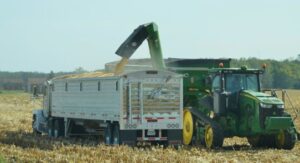
Harvesting crops is one of the most time-sensitive and labor-intensive parts of farming. If there are delays or things aren’t efficient, a lot of crops can be lost, and what’s left might not be as good. But new harvesting machinery has completely changed this. Modern combines, balers, and other special equipment can work faster, for longer hours, and much more precisely than before. For example, advanced forage harvesters are built to process animal feed crops super fast and consistently, making sure they keep as many nutrients as possible. These machines use smart sensors and automation to get the perfect cutting height, chop length, and processing, which means less waste and a top-quality product.
Maximizing Yield with Modern Equipment
Beyond just harvesting, technology is now part of almost every step in modern farming to get the most out of crops. Precision agriculture uses tools like GPS, drones, and soil sensors to build a detailed picture of what’s happening on the farm. Tractors guided by GPS can plant seeds, spread fertilizer, and spray treatments with pinpoint accuracy, avoiding both missed spots and overlapping. Drones with special cameras can check crop health from above, spotting problems like pests or nutrient shortages before they spread. This data-driven approach lets farmers step in exactly where needed, using resources wisely. This connection between technology and productivity growth in agriculture is key to getting more out of our farms.
Sustainable Practices in Large-Scale Farming
Modern farm technology isn’t just about growing more food; it’s also about doing it in a more sustainable way. Being efficient and taking care of the environment often go hand in hand. When fertilizers and pesticides are applied precisely, it means less chemicals are used overall, which reduces the chance of them washing into rivers and streams. Smart irrigation systems use moisture sensors to deliver water right to the plant roots only when needed, saving a precious resource. Plus, methods like conservation tillage, which means disturbing the soil as little as possible, are now easier thanks to specialized planting equipment. These practices help keep the soil healthy, stop erosion, and improve soil quality for the long run.
The Economic Impact of Efficient Agriculture
Using advanced technology brings big financial benefits. For farmers, being more efficient directly leads to more profit because they get bigger harvests and spend less on supplies. This financial stability helps rural communities thrive and supports local economies. On a national and global scale, a strong farming sector means food security and helps keep food prices stable for everyone. Countries with productive agriculture can also export more, which is good for their trade balance. Investing in farm technology is really investing in a strong economy and future prosperity.
We need to keep adopting and developing these tech solutions. They’re vital for building a strong, productive farming system that can feed a growing world for many years to come.